Trusting Your Gut
“How do you create safe spaces for horses?
You feel safe.
How do you feel safe?
You inhabit safe spaces.”
We have been taught to live in our heads. To reason our way through life. To analyze, to weigh options, to think things through, to figure it out, to make smart decisions.
But wisdom comes when we plug into the deeper intelligence of the whole body and its limitless interconnection with all other beings.
In Qigong we talk about charging the Dantians and bringing them into coherence. Upper dantian is located at the third eye, and is the center of brain health. Middle dantian is located at heart center, and is where qi is turned into your essence and spirit, where we experience and express love and acceptance and interpersonal connection. Lower dantian is located in the lower belly, and is the center of gut health, where vitality begins. Each is a center of intelligence, and when working together bringing your entire being into coherence, we can live in wisdom. We can feel the world and move energy with the whole of our being.
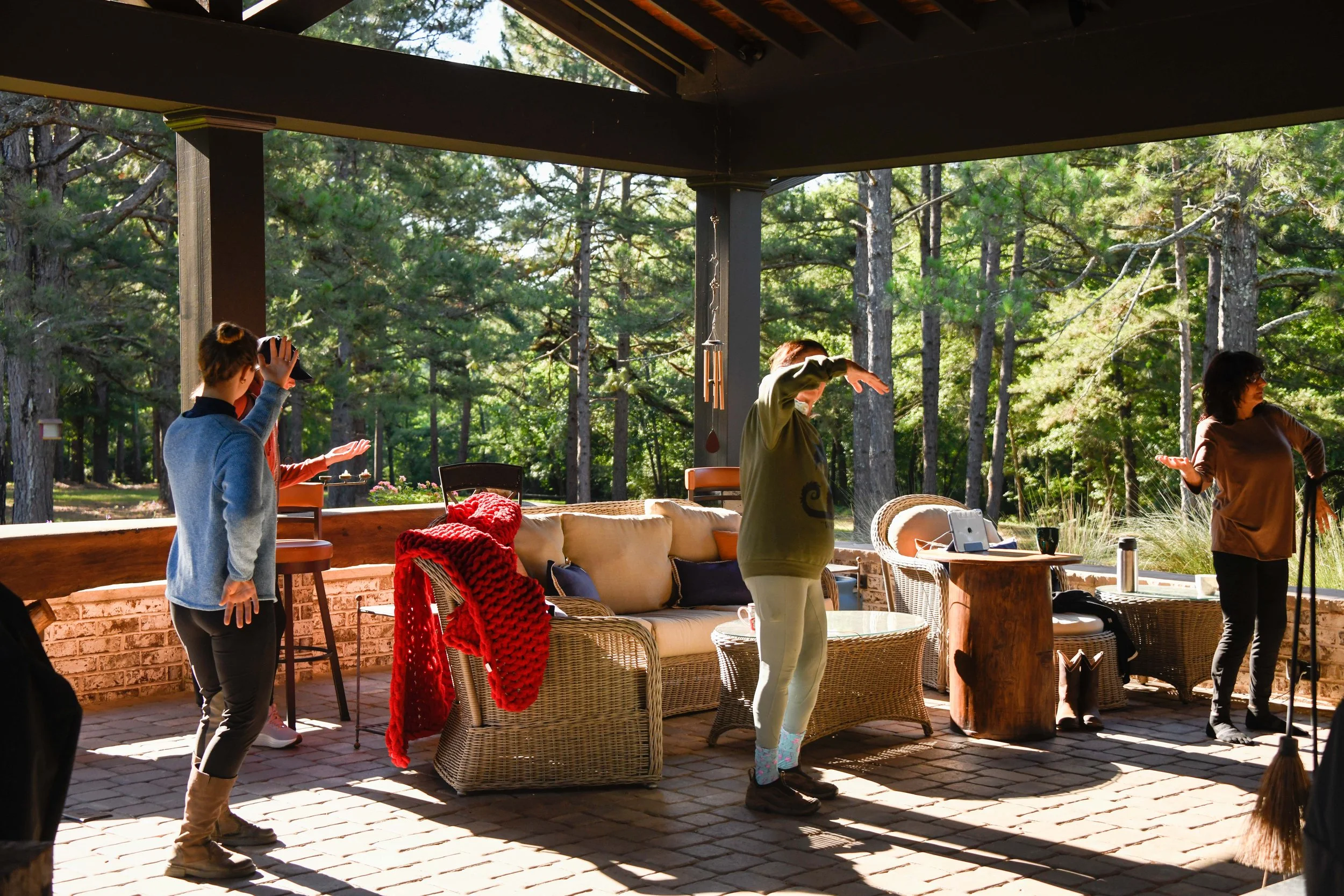
Qigong practice at the Education to the Hand Clinic in Aiken, SC.
Photo by Richert-Burke Photography
Since the dawn of modern neuroscience in the 17th century, popular belief is that consciousness (thinking, knowing, and the experience of being) occur in the brain, not the body. Thanks to René Descartes, mind-body dualism began to separate our thinking from our corporal being.
From there popular western thought has led us to believe that our bodies are mechanical meat suits designed to carry the head around as it takes in information and guides us to everything we need to survive and reproduce. I have a degree in psychology and take great interest in the workings of the brain, but have come to realize that consciousness and intelligence exist far beyond the bounds of the head.
I think that in an effort to be more inclusive and less biased, our modern society has moved even farther away from being in touch with the gut. Trusting your intuition without any rational reason is often frowned upon. You might be called judgemental, crazy, irrational, or self-centered if you make choices in alignment with your gut feelings without a visible, obvious reason or information to support those decisions. Oftentimes I’ve called myself those names, and have ignored my gut feelings.
The animals are intimately connected to these gut feelings and respond to them above any behaviors or other communications we manufacture to do what we think we should be doing. But they don’t care about what you believe is right. They care about how you feel. And how those feelings that you embody expand into the environment and impact them.
When our gut and our heart and our mind are not on the same page, we have conflict within us and around us.
Sometimes that takes the form of pain and illness. Sometimes it turns into conflict with others or loss of connection. The horse at liberty who turns and peels off away from you despite you “doing everything right”. The horse that won’t go forward under saddle when your legs are saying go forward but your gut is saying “I’m scared” and your brain is saying “I’m not good enough”.
This is where we begin to see clearly that horsemanship hardly has anything to do with our ability to take theory and put it into practice to train behaviors in our equines, but much more with our ability to know who we are and live our lives in a way that cultivates authenticity.
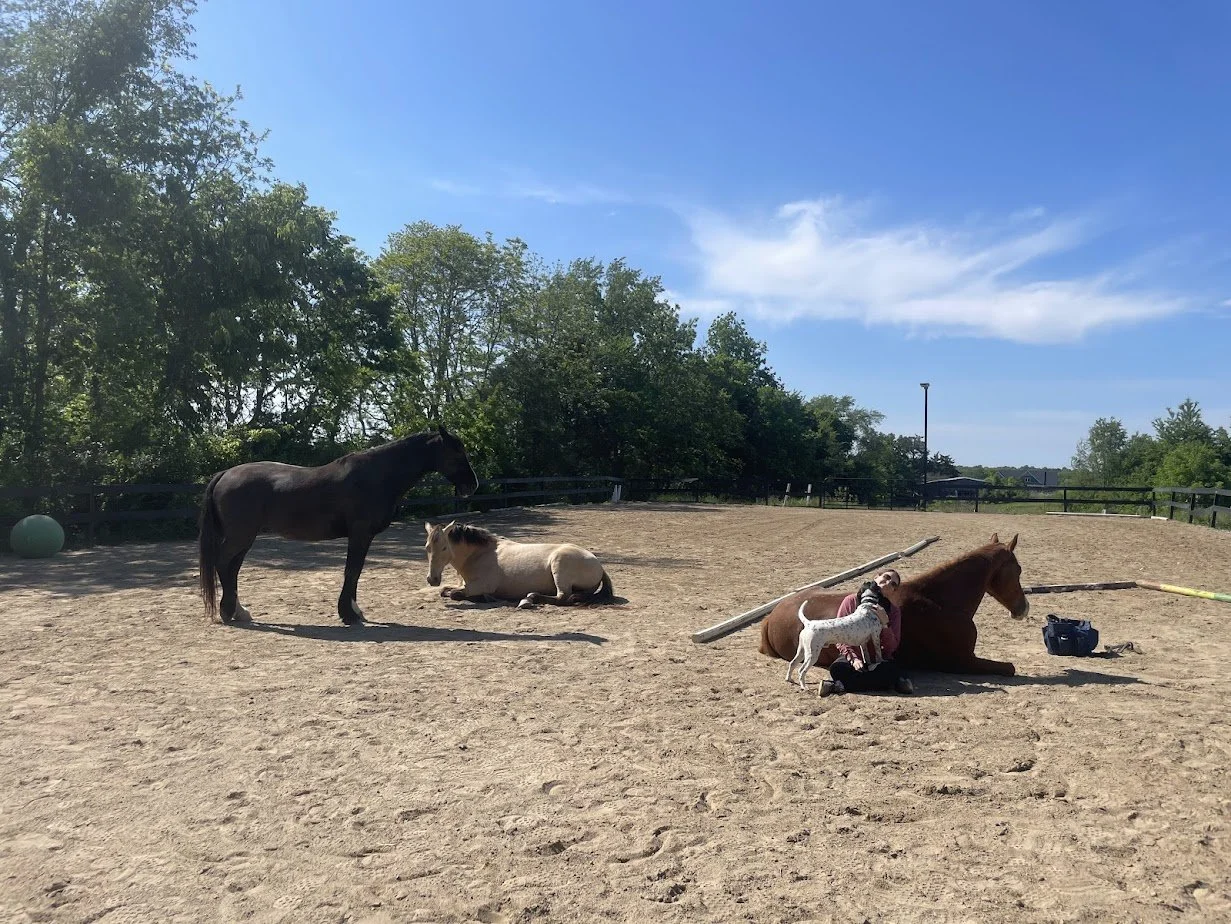
Macy and Otis and I creating a safe space for the horses to rest and commune in our arena by showing up authentically with open hearts.
Sometimes listening to your gut is messy. Sometimes it means calling off a wedding even though love is not lacking. Sometimes it means saying goodbye to an opportunity that looks like it may grow your business, but is causing your heart to close and your gut to carry a heavy lump. Sometimes it means keeping our loved ones at a distance while you both heal. Sometimes it means you step out of a collaboration because it’s not sustainable. Sometimes it means putting shoes on a horse you were taught had perfect feet. Sometimes it means accepting that a horse you love isn’t able to heal and is ready to cross over.
In the more distant past, when I’ve had strong gut feelings, I’ve completely ignored them.
I grew out of touch with my body until it had to scream at me to get my attention and incapacitate me until I learned to listen to it.
My body taught me how to listen, but then I developed a lens of trying to just make the pain go away or analyze the situation my body was responding to. It still wasn’t true coherence. I’d get gut feelings to stop inhabiting certain spaces, to stop interacting with certain people, and if it all looked alright on paper, I’d say “ok body, I’m listening, but I’m not ready to change.” I’d keep listening and noticing, but I wouldn’t act on what those feelings told me to do.
I’d ask the universe “can you show me a reason that I can understand as to why I need to make this change?” And if I wait long enough without acting on my gut feelings, the universe shows me that sure enough, there was a very good reason to make the choices my body was nudging me toward.
It’s so hard to give up our modern western human desire to understand with the mind, as if it’s the only way to validate what the rest of the body knows.
Nature shows us that the whole of our being is far more intelligent than any brain is.
In a 2010 study, slime mold (which are just a bunch of amoebae grouped together, which have no brains) mapped out the Tokyo subway system when placed in a petri dish with food spaced out at all the main urban centers– they found the most efficient way to connect the dots, something only previously thought possible by a group of highly skilled and trained engineers.
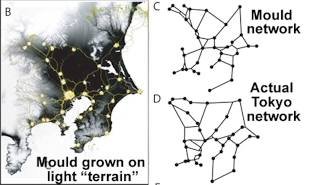
Atsushi Tero et al., Rules for Biologically Inspired Adaptive Network Design. Science 327, 439-442(2010). DOI:10.1126/science.1177894
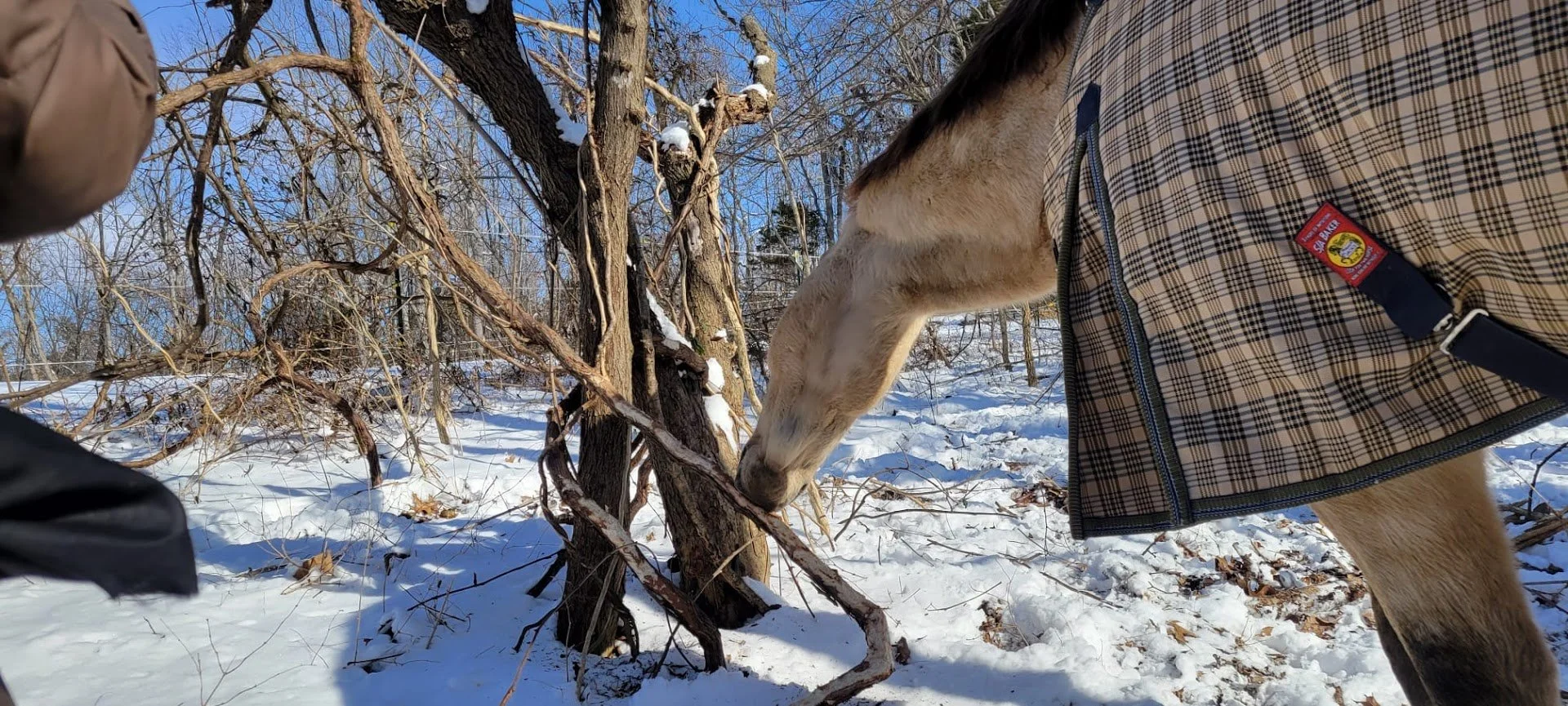
I observe horses in our herd at Sage Knoll Farm choosing to eat plants that have medicinal properties for what they need– the horses have not had to study herbalism, but their bodies know what they need. Horses with gastrointestinal problems gravitate towards the slippery elm. Horses with hormonal imbalance are caught eating the black raspberry leaves. Metabolic horses eating the bark of grapevines.
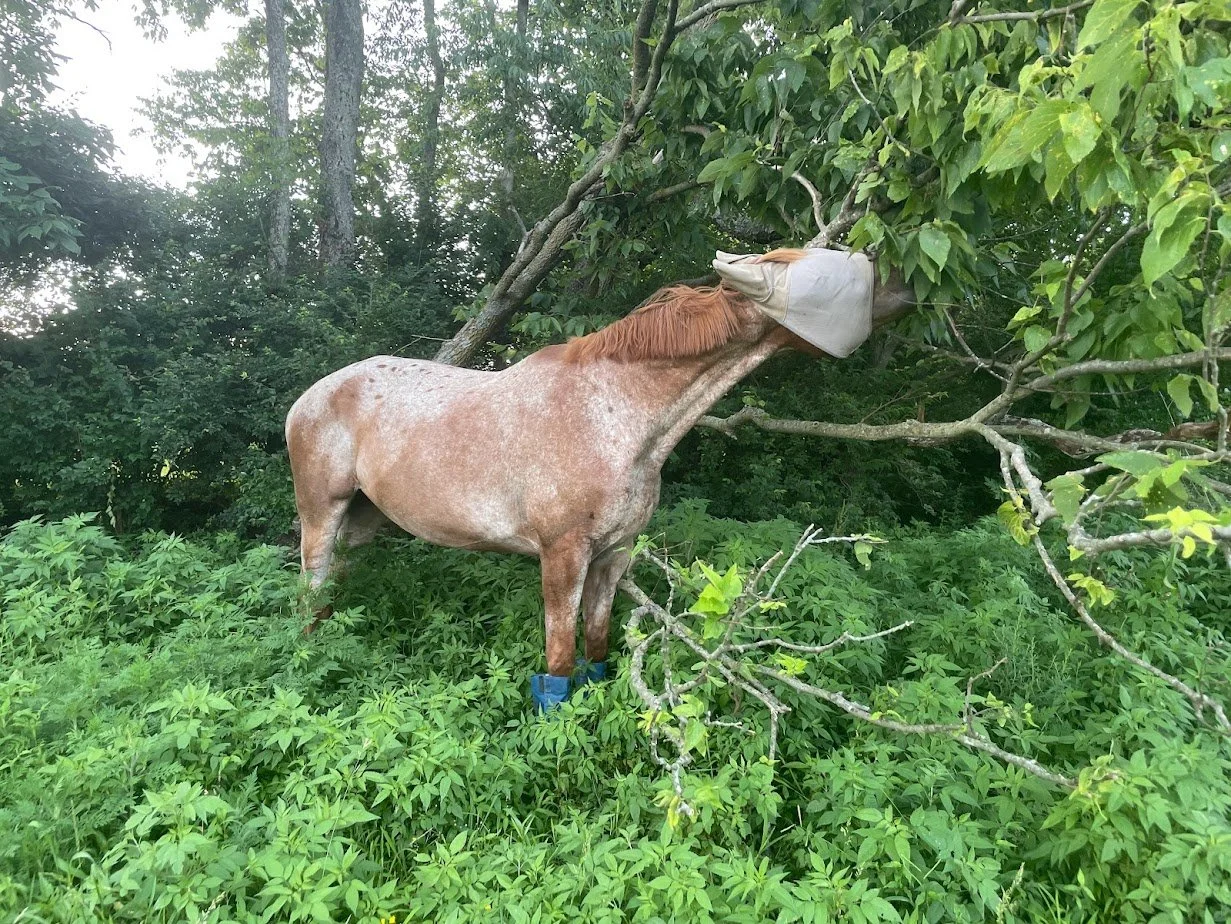
There have been countless examples, and when I go to research what they’re eating, it never fails to amaze me how well they know their bodies and how well their bodies know their environment, when given the opportunity to live in a species appropriate manner.
I’ll never forget a time when I went out to a barn I boarded at and thought I had just enough time to get my horse out, do a few things, and put him back before a big storm came through– I was just watching the radar and acting off of it. One of Sage’s friends, Ringo kept trying to keep us from leaving the field. He kept getting in front of us and was very distressed that I was taking him away from their safe space at the back of the field. When I returned from the barn lightning literally struck the ground in front of us while I was taking off Sage’s halter. Listen!

When our horses’ needs are met, their intelligence is beyond what we were taught was possible. They know exactly what they need and how to ask for it, so long as we continue creating a space safe enough for their questions. They often know what we need to, before we do.
Which brings us back to Nahshon’s message last weekend.
If we want to show up for the horses and be able to listen to them, we have to feel safe in our own bodies, enough to listen without the brain overriding everything. And to feel safe in our bodies, we have to practice feeling safe— choosing where and with whom we spend our time so we can be our authentic selves without fear.
Choosing to stop performing for others and instead embodying our gifts and sharing them.
In writing this piece, I’m setting my intention to begin trusting my gut enough to act on what it tells me without making it wait for the brain to find its rational reasons.